

Smash Out: Cannon Fest 3D
Flare Star LLC
I spent time with Smash Out: Cannon Fest 3D as a quick, casual puzzle game, and its appeal is easy to understand: you aim a cannon, break blocks, and look for shots that do more than simply remove one target. The satisfying moments come from spotting a useful angle, setting off a chain reaction, and clearing a crowded arrangement with fewer shots than expected. It is simple to begin, but the better results depend on patience rather than frantic tapping.
The game is free to download, which makes it an easy choice when I want something light for a short break. It is listed for Everyone, so the presentation is broadly suitable for families, although younger players may still need guidance around optional purchases. Those purchases range from $1.99 to $99.99 per item, an important detail for anyone handing a phone or tablet to a child. My overall impression is positive but measured: this is best approached as a compact aiming-and-puzzle experience, not as a deep strategy game with endless layers of complexity.
How the basic play loop works in real use
The first thing I do in a level is resist the urge to fire immediately. The cannon is the central tool, but the real puzzle is reading the layout before committing to a shot. I look for blocks that appear to sit in a useful position relative to several others, then consider whether a direct hit or a bounce is more likely to create a larger reaction. That small pause changes the game from simple target practice into a timing and positioning exercise.
Each shot feels more valuable when it affects several objects. A direct hit may be the obvious answer, but it is not always the efficient one. If a block can be used to redirect the projectile or open access to a denser group, I prefer that route. This is the first habit I would recommend to a new player: think about what the shot makes possible next, rather than judging it only by what disappears immediately.
The ordinary workflow is comfortable for short sessions. I start a level, scan the arrangement, test the safest useful angle, and then adjust my next shot according to what remains. That rhythm works well during a commute, while waiting for an appointment, or when I want a game that does not demand a long uninterrupted session. It also means the game is easy to put down without losing the sense of what I was doing.
Related News






What I like most is the physical clarity of the idea. The cannon gives every action an understandable cause and effect. When a shot works, I can usually see why: the angle was better, the first target was positioned well, or the resulting movement exposed a more valuable group. That makes success feel earned even when the game remains accessible.
There is a trade-off, though. Players looking for a large campaign, character development, or a powerful narrative hook will probably find the core loop too narrow. The enjoyment comes from improving decisions inside the same basic format. If your favorite casual games are match-three adventures with collections and long-term progression, this may feel more like a focused side activity than a replacement.
My repeatable routine for difficult layouts
On a tricky arrangement, I divide the level into three questions. First, which target is blocking the most useful route? Second, can one shot reach more than one meaningful object? Third, if the first attempt is imperfect, will the remaining layout still be manageable? This approach prevents me from chasing the biggest-looking cluster while ignoring the block that controls access to it.
Gallery
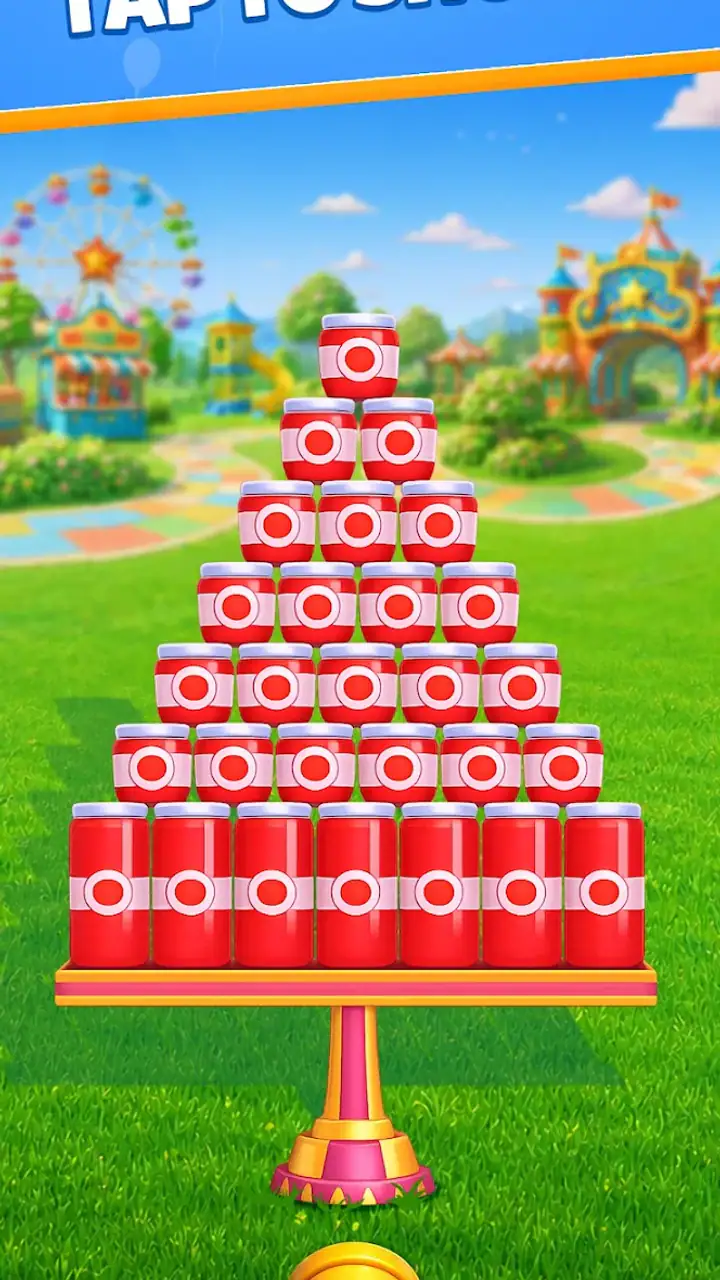
I also avoid treating the cannon as if it must always fire at the nearest target. A nearby block can be a poor choice if it leaves the rest of the board awkwardly separated. Instead, I compare immediate progress with future positioning. That is a small but important distinction, and it is where experienced play begins to separate itself from random firing.
For everyday play, I find it useful to use a “one observation, one decision” rhythm. I observe the current arrangement, choose a purpose for the next shot, and then reassess after the result. I do not try to plan an entire level in advance because the board can change after each impact. This keeps the process flexible and avoids wasting time on a plan that depended on blocks staying exactly where they were.
Another practical habit is to stop after a disappointing shot and inspect the new shape before tapping again. The instinctive response is often to fire quickly and recover through speed. In this game, that can make a small mistake more expensive. A short reset of attention is usually more useful than trying to erase the error with another rushed shot.
Settings and play habits worth checking
Because this is a compact game, I would not expect a large settings system to transform the experience. The useful approach is to check the available controls and presentation options once, then choose a setup that makes aiming comfortable on your device. Screen size, touch sensitivity, sound level, and notification interruptions can influence how relaxed the game feels, even when they do not change the underlying puzzle.
I prefer playing with enough volume to notice the impact feedback without making it distracting. The chain reaction moments are more satisfying when I can hear them, but I would lower the sound in a shared space rather than letting the effects dominate the room. For quiet environments, the visual result still communicates the outcome clearly enough for short sessions.
Touch accuracy matters more than people may expect from a casual title. I play with the device held steadily and avoid dragging from an awkward edge when I need a precise line. If the screen is small, I make slower aiming movements and give myself a moment to confirm the direction before releasing. This is not a hidden shortcut; it is simply a practical way to reduce accidental shots.
I also recommend checking purchase controls before letting someone else use the device. Smash Out: Cannon Fest 3D is free, but optional items can cost from $1.99 up to $99.99 each. That does not make the game unsuitable for families, yet it does make device-level purchase protection sensible. A child-friendly age label describes the content, not the spending decisions that can happen around a free game.
The game runs on Android devices using version 6.0 or later, which gives it a broad technical reach. I would still keep the operating system updated where possible and close demanding background apps if the phone is older. That is less about a special requirement from the game and more about keeping touch response and general stability consistent during precision shots.
One setting-related habit I find useful is choosing a regular play environment. If I am testing a difficult level while walking, on a moving vehicle, or in a crowded place, I am more likely to blame the game for a missed angle that was really caused by an unstable grip. When I want to judge my actual progress, I play seated with the screen at a comfortable angle. That makes improvement easier to recognize.
Faster patterns that improve consistency
Speed in this game does not come from firing as quickly as possible. It comes from reducing unnecessary decisions. Before every shot, I try to identify one clear objective: open a lane, remove a central obstacle, or trigger a reaction. When the objective is obvious, I spend less time hovering over the screen and make fewer impulsive attempts.
A useful pattern is to search for the shot that changes the geometry of the level. Removing a single block may not look impressive, but if it exposes several targets or creates a clean route, it can be more valuable than hitting a larger isolated group. This is especially helpful when the layout seems crowded and the most visible target is not the most strategically important one.
I also look for safe experiments early in a level. If there is a low-risk shot that reveals how the blocks respond, I may use it before committing to a more ambitious angle. The point is not to waste a turn; it is to gain information while preserving a workable position. That trade-off is worthwhile when the board is unfamiliar or when a chain reaction could develop in several directions.
Another repeatable technique is to separate setup shots from payoff shots. A setup shot creates the alignment or opening needed for a later result. A payoff shot takes advantage of it. New players often judge setup shots as failures because they do not clear much immediately. I have found that recognizing their purpose makes the levels feel less random and helps me plan with greater confidence.
When a reaction begins, I do not assume every visible target will be removed. I watch what actually changes and then plan from the remaining structure. This matters because a visually dramatic result can still leave one awkward pocket behind. The best follow-up is often aimed at that leftover pocket rather than at the biggest group that remains elsewhere.
For short sessions, I use a simple stopping rule: if I have repeated the same shot without learning anything new, I pause instead of continuing automatically. A break of a few minutes often helps me see a different angle when I return. This is a better use of the game’s casual format than turning one stubborn layout into a frustrating extended session.
Where experienced play reaches its limits
The deeper I go into the game’s aiming loop, the clearer its limits become. It rewards observation, but it does not appear designed to become a full strategic sandbox. There is a ceiling to how much variety can come from aiming at blocks and arranging chain reactions. Players who need constantly changing mechanics may eventually want a broader puzzle game alongside it.
That limitation is not necessarily a flaw. A narrow focus can be exactly what makes a casual game useful. I can open it without remembering a complicated inventory, a long quest, or a set of character abilities. The cost is that the long-term motivation depends heavily on whether I enjoy refining shots and solving layouts for their own sake.
The free model also deserves a realistic look. The absence of an upfront price lowers the barrier to trying it, but the presence of optional items means I would not describe the experience as entirely separate from spending choices. Anyone who prefers a one-time purchase with no temptation to buy extras may be more comfortable with a paid alternative in the same broad casual space.
The rating sits at a 3.9 average from around 147 ratings, while the game has passed 100K installs. I read those figures as a sign of a modest but established audience rather than proof that it will suit everyone. The numbers suggest enough interest to make trying it reasonable, but they do not replace personal preference. Someone who dislikes physics-like aiming will probably not become a fan simply because the game is popular.
Flare Star LLC is the developer behind the game, and the current version is 1.2.1. I consider that version detail useful when troubleshooting or discussing the experience with other players, but I would not choose the game based on the number alone. What matters more is whether the current build feels responsive on the device I plan to use and whether the available controls match my comfort.
There are also situations where I would skip it. If I want a calm game with no pressure from missed shots, a non-aiming puzzle may be better. If I want a competitive multiplayer session, a social strategy title is a clearer fit. And if I am looking for a substantial offline-style adventure with a strong sense of progression, Smash Out: Cannon Fest 3D is too focused to fill that role.
Who will get the most from it
I think the best audience is someone who enjoys compact puzzles built around spatial judgment. It suits players who like testing an angle, seeing a chain reaction, and trying again with a better plan. It is also a good option for people who want a game that can be understood immediately but still rewards more careful play after the first few sessions.
It works particularly well as a break-time game. Imagine having ten minutes before a meeting: I can play a few levels, stop without needing to remember a plot, and return later with the same basic controls in mind. The game’s structure makes that kind of use natural. It is less suitable for a long evening if I am expecting a wide variety of activities or a strong sense of narrative progress.
Parents should find the Everyone rating reassuring from a content perspective, while still treating the in-app purchase range seriously. I would let a child try it only after checking the device’s purchase safeguards and explaining that free access does not mean every optional item is free. That is practical advice for this title specifically because its low entry price can make it feel harmless at first glance.
Players comparing it with familiar alternatives should ask what they value most. Match-three games usually offer more collection, progression, and themed content. Physics puzzle games may provide more elaborate object interactions. Arcade shooters may deliver faster reflex action. This game sits between those styles: it uses the immediate satisfaction of shooting, but asks for puzzle-like planning rather than constant speed.
My verdict after building a consistent approach
After settling into its rhythm, I see Smash Out: Cannon Fest 3D as a straightforward casual game with a worthwhile layer of judgment beneath its simple controls. The strongest experience comes from treating every shot as a decision, using early attempts to understand the layout, and looking for reactions that improve the next position rather than merely producing instant destruction.
My recommendation is strongest for players who want free, short-session entertainment and enjoy improving through observation. I would also recommend it to someone who likes the idea of a cannon game but wants more thought than ordinary target tapping. The game is easy to pick up, and its best moments come from the satisfying connection between a carefully chosen angle and a larger result.
I would be more cautious with anyone who needs deep progression, a large variety of mechanics, or a completely purchase-free environment. The optional items, including those priced as high as $99.99, deserve attention before the game is shared with children. The compact design can also become repetitive if the basic block-and-reaction loop is not already appealing to you.
For my own use, the winning formula is simple: play in a stable position, inspect the layout, assign a purpose to each shot, and pause when repetition replaces learning. Those habits make the game feel more deliberate without pretending it is more complex than it is. The real strength is not the cannon itself, but the small decisions that turn one shot into a useful chain of progress.
In the end, I see this as a pleasant, focused addition to the casual category rather than an essential all-purpose game. Its free entry, Everyone rating, broad Android compatibility, and compact sessions make it easy to try. If you enjoy aiming puzzles and are comfortable with a focused loop, it is worth a look. If you want a richer alternative with deeper systems or a different spending model, another casual game will probably serve you better.
FAQs for Smash Out: Cannon Fest 3D
What is Smash Out: Cannon Fest 3D?
Smash Out: Cannon Fest 3D is a casual physics-based action game centered on firing cannonballs at targets, structures, and obstacles. Each level typically challenges you to aim carefully, manage the shot’s trajectory, and cause as much destruction as possible. Its simple controls make it easy to start, while increasingly complicated layouts add more strategy as you progress.
How do you play Smash Out: Cannon Fest 3D?
Gameplay is generally built around aiming a cannon and adjusting the direction or power of each shot before launching. You need to study the stage, identify weak points, and use the environment to create larger chain reactions. Some levels reward accuracy, while others encourage experimentation, so taking a moment to plan is often more effective than firing immediately.
Is Smash Out: Cannon Fest 3D free to download and play?
The game is usually available as a free download, allowing players to try its core levels without paying upfront. However, free mobile games may include advertising, optional purchases, or other monetization features. Before downloading, check the current Google Play or App Store listing for details about ads, in-app purchases, supported devices, and any regional availability differences.
Does Smash Out: Cannon Fest 3D require an internet connection?
For basic gameplay, a constant internet connection may not always be necessary, particularly if the game has already downloaded its level content. Nevertheless, an online connection can be required for advertisements, updates, analytics, purchases, or additional features. If you plan to play offline, test the game after installation and remember that some functions may be unavailable.
Is Smash Out: Cannon Fest 3D suitable for children?
Smash Out: Cannon Fest 3D uses cartoon-style destruction and cannon-based action rather than realistic violence, which may make it appropriate for a broad audience. Even so, parents should review the store age rating and consider the presence of advertisements or optional purchases. Younger players may also benefit from supervision, especially when device permissions or spending features are involved.
Pros
- Simple controls make it easy to start playing immediately.
- Short levels are convenient for quick gaming sessions.
- Colorful 3D visuals give the game a cheerful
- casual feel.
- Satisfying cannon impacts make successful shots feel rewarding.
- The game is accessible for players who prefer relaxed gameplay.
Cons
- Gameplay can become repetitive after the initial levels.
- Later stages may rely heavily on trial and error.
- Progression may feel limited for experienced arcade players.
- Some players may find the physics occasionally unpredictable.
- The game may offer limited depth beyond completing each level.


